 HUATAO ROLLS
Chill & Cooling Rolls
Cooling roles differ by station. Start with the casting position or the downstream pull-roll station, then confirm the required coolant circuit and drawing.
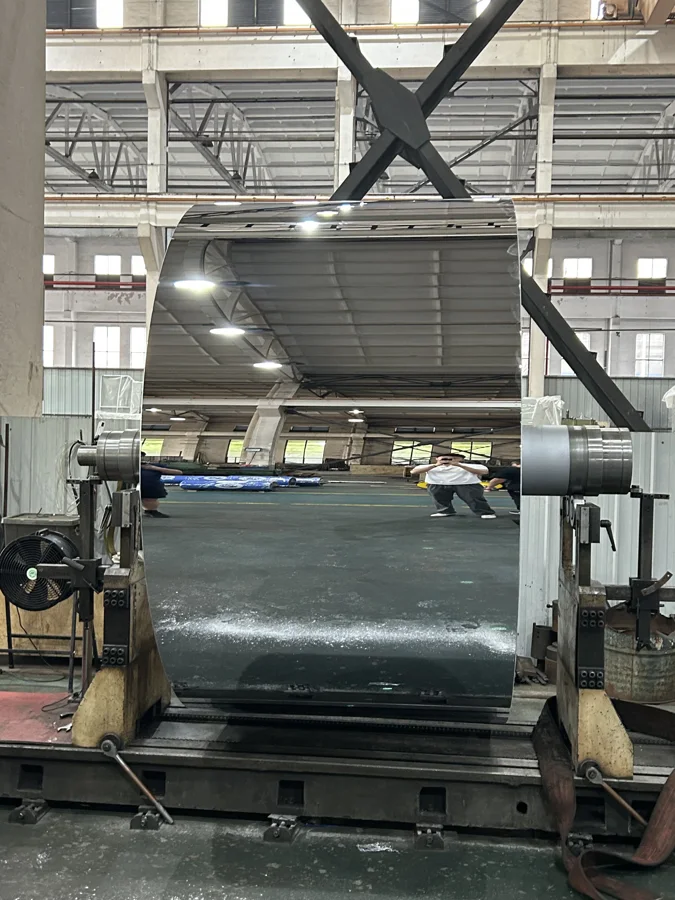
Rollers and configurations
| Product | Product description |
|---|---|
| Chill Roll | On BOPP and BOPET casting lines, the chill roll extracts heat from molten polymer immediately after the die. The solidification profile affects film crystallinity and surface texture. The circulating water redistributes heat across the barrel, limiting cross-web differences that can translate into film defects. Specify the coolant, flow, inlet temperature and working surface temperature together. Keeping the surface above the local dew point helps prevent condensation. Stable cooling and surface condition can help control defects such as bubbles and scratches. The original catalogue lists stainless, low-carbon, medium-carbon and alloy steel choices, plus a dual-flow, double-shell option. The roll may be produced to the buyer's drawing or reviewed from operating requirements. Confirm the combination of diameter, face length, finish and thermal load. The original page gives both ±1 °C and ±0.5 °C for surface temperature variation, so the measurement method and agreed target belong in the project specification. |
| PRS Cooling Roll | A pull roll stand (PRS) cooling roll cools the surface of oriented film after the TDO section and ahead of winding. Removing heat at this point helps manage thermal shrinkage and deformation as the film is taken up. The roll uses a double shell with welded spiral guides between the shells. Single-flow and dual-flow circuits are listed. Working surfaces include chrome, a release coating and a stainless steel layer. Out-of-roundness and cylinder form are listed at ≤0.1 mm. The original page describes automatic threading and individually driven rolls as possible stand features. Thickness measurement, corona or flame treatment and edge trimming are functions of the wider stand. Confirm the cooling roll's own duty, coolant connections and surface requirement by station. |
| Water Tank Fluted Roll | Installed in the front-end water tank of a biaxially oriented film line, this roll contacts the cast sheet to help flatten it. Its cover is specified for strength and repeated contact with water. The cover is rubber with a machined groove pattern. The original listing identifies square, diamond and herringbone patterns. Review groove geometry, face width, mounting and tank conditions against the actual casting layout. |
| Stripping Roll | The stripping roll operates in the casting water tank at the front of a biaxially oriented film line. It helps smooth the film during stripping from the preceding surface. The original listing specifies a Hypalon (CSM) cover for strength, wear and water resistance. Confirm the working surface, geometry and drive interface against the drawing for the casting station. |
| Dehydration Nip Roll | This EPDM-covered nip roll is installed at the front-end dehydration station. It presses against the film to remove water from the surface before stretching. Effective dewatering helps limit visible water marks after orientation. The original source identifies EPDM for resilience and wear resistance. Confirm cover thickness, hardness and nip load against the mating roll and film conditions. |