 HUATAO ROLLS
How to Specify a Cold-Lamination Nip Roll for Variable Sheet Thickness
Specify a cold-lamination nip roll for rigid sheets with variable thickness. Define material samples, nip adjustment, and cross-width trial acceptance.
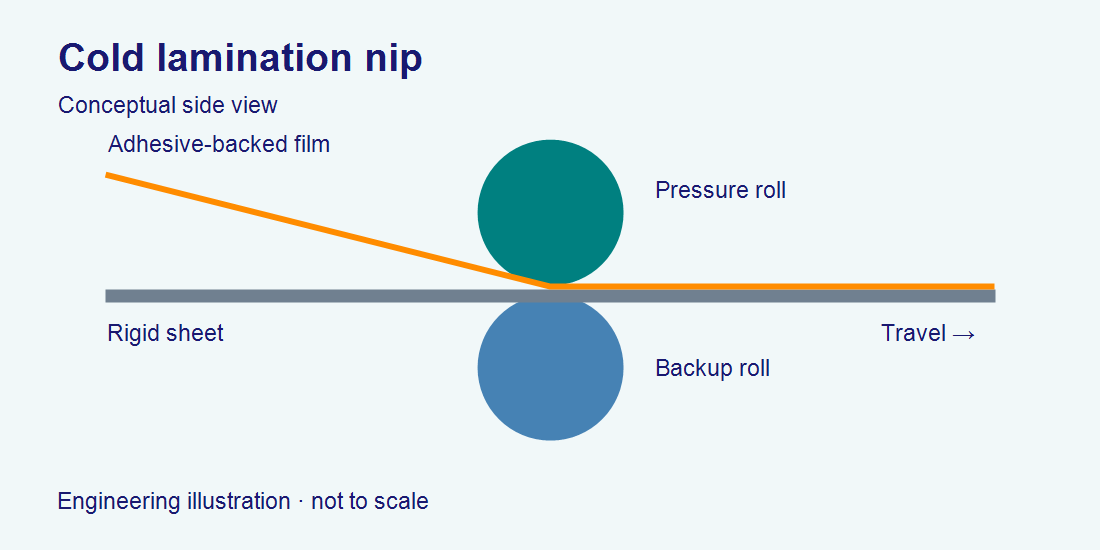
Specify the full range of sheet thickness and flatness, the film and adhesive system, and the intended production speed before ordering a cold-lamination nip roll. Ask the equipment supplier to demonstrate that the proposed roll cover and adjustment system maintain acceptable contact across the working width on both thin and thick sheets.
Give suppliers the full material range
Provide the minimum and maximum sheet thickness, usable width and any expected thickness variation across one sheet. Include representative samples with the actual film and adhesive. Record surface finish, flatness, edge condition and any cosmetic limits. Clarify whether the machine will process mixed thicknesses within a run or change settings between batches.
Define which adjustments the operator needs
Ask how the machine sets and repeats the nip gap and applied load. If the machine uses air cylinders, record cylinder pressure as a machine setting and ask how the supplier will verify actual transverse contact. Discuss roll alignment, cover material and hardness, the mating roll and sheet support on either side of the nip. A compliant cover can accommodate some variation, but its suitability depends on the material pair and trial results. For replacement work, include the roll drawing, journal dimensions and available adjustment travel.
Agree on a representative trial
Run samples at the thin and thick ends of the range, then repeat at the intended speed. Inspect the edges and center for bubbles, wrinkles, marks and lifting. Agree how adhesion will be checked and when the test will be performed after lamination. Record the film batch, speed, gap and load settings so the trial can be repeated. If a defect appears, document its position and vary one setting at a time to distinguish sheet support, roll alignment, film tension and nip adjustment.
The quotation should state the proposed roll design, how settings will be reproduced, and who supplies test materials and signs off on the acceptance samples. See inspection planning for a checklist to attach to the RFQ.
### Technical reference
- [3M technical bulletin on lamination techniques](https://multimedia.3m.com/mws/media/131108O/lamination-techniques-for-converters-of-laminating-adhesives.pdf)